
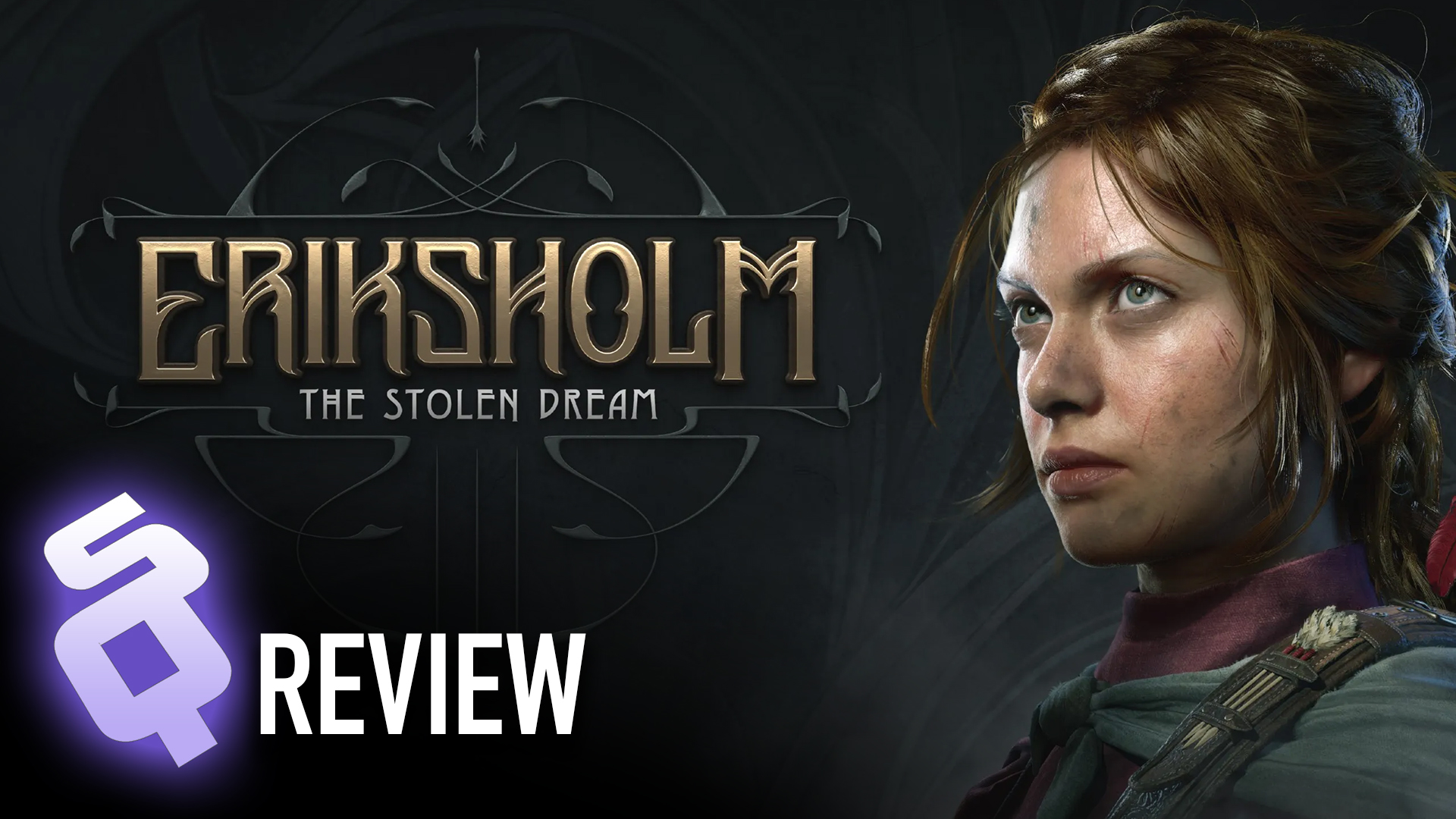
Tactical stealth action and real time mechanics combine in this Scandinavian steampunk adventure
Growing up as a young kid my knowledge of video games was mostly limited to what was available on consoles, and to a lesser extent our Gameboy. Even less was my experience with PC exclusives, as our family was a late adopter to having a computer in our household. So when I would go over to my friend’s house and use his dad’s computer it was always like a eureka moment, a peek into what wasn’t possible on a console at the time. I discovered such things as Zork, King’s Quest, and more.
And so when our family got our own computer when I was a bit older and what was possible on computers had evolved more, it was all I could ask for. The games I looked forward to were Diablo, Baldur’s Gate, and Morrowind, just to name a few. But there was one other that I remember to this day, and that was Commandos. It was a top-down stealth tactics game, one of the first of its kind. I’ve always looked into similar games as they’ve come out, but I’ve always been terrible at them; it wasn’t until Eriksholm that that feeling I was looking for had finally resurfaced.
Set in the fictional Eriksholm, a large city that draws inspiration from steampunk aesthetics and 1900s Scandinavia, River End Games’ first game is a must play for any fan of the isometric stealth games á la Commandos.
We take control of Hannah, a citizen of the titular city. Our brother has gone missing, on the run from the police, and it becomes our mission to find him before they do. All of this leads to the heart of a conspiracy that could destroy the city. The story isn’t anything special on a fundamental level, and it falls apart a bit in the last act, but the way it’s organically woven into the gameplay is extremely well done. Unfortunately, it always feels like we’re missing context or it’s just not important to the overall narrative. If it wasn’t for the brilliant voice acting and production level of the cinematics, it’d be hard to care about the plot.
As Hannah we can incapacitate enemies with darts from our tranquilizer blowgun, or avoid conflict by entering ventilation ducts only she can fit into. As the game progresses we’ll be joined by the rebel Alva and the fisherman Sebastian. Alva is older and bigger than Hannah, and therefore unable to avoid detection in the ducts; instead, while controlling Alva we are able to throw rocks to take out light sources and distract enemies. Sebastian on the other hand is big and strong, being able to sneak up on enemies to strangle them.
As a tactical stealth game, Eriksholm has quasi-real-time mechanics. We’re only given direct control of one of the three characters at a time, requiring us to juggle between each by pressing their corresponding button on the D-Pad. But we’re able to slow down time to a near standstill by opening up the tool wheel of the current character. In fact, the game is almost too forgiving with how slow things move while this is active, especially considering each character only has one ability to use.
While I prefaced this review with a comparison of Commandos, I don’t want anyone to think it’s purely a game of strategy, because it’s not. It’s just as much a puzzle game, with each chapter playing out like a finely crafted puzzle box. Each little area we come too has a specific route to take, and getting through it requires a specific sequence of events to carry out. Doing something differently almost always results in being spotted and sent back to the last checkpoint, though they are frequent.
The production levels on display in Eriksholm are incredible. The few cinematics throughout have some great voice acting and realistic facial animations, but what was even more impressive were how the visuals during in-game sequences enhanced the feel of the story. There’s a sense that we’re looking down on a vast and sprawling diorama. Every time I came across NPCs or enemies having a scripted conversation in the background, or when the isometric in-game cinematics played, I found myself thinking of the PSX-era RPGs like FF9. It wasn’t so much the character art that drew me in, but the backgrounds and the way the camera looked down on the scene.
Eriksholm: The Stolen Dream, with its more simplistic and streamlined take, is a great introduction to the stealth tactics genre. It may be on the shorter side, taking me only ten hours to finish, but it was time well spent. I can’t wait to see what River End Games dreams up next.
This review is based on a copy of the game purchased by the reviewer.


No Comments