
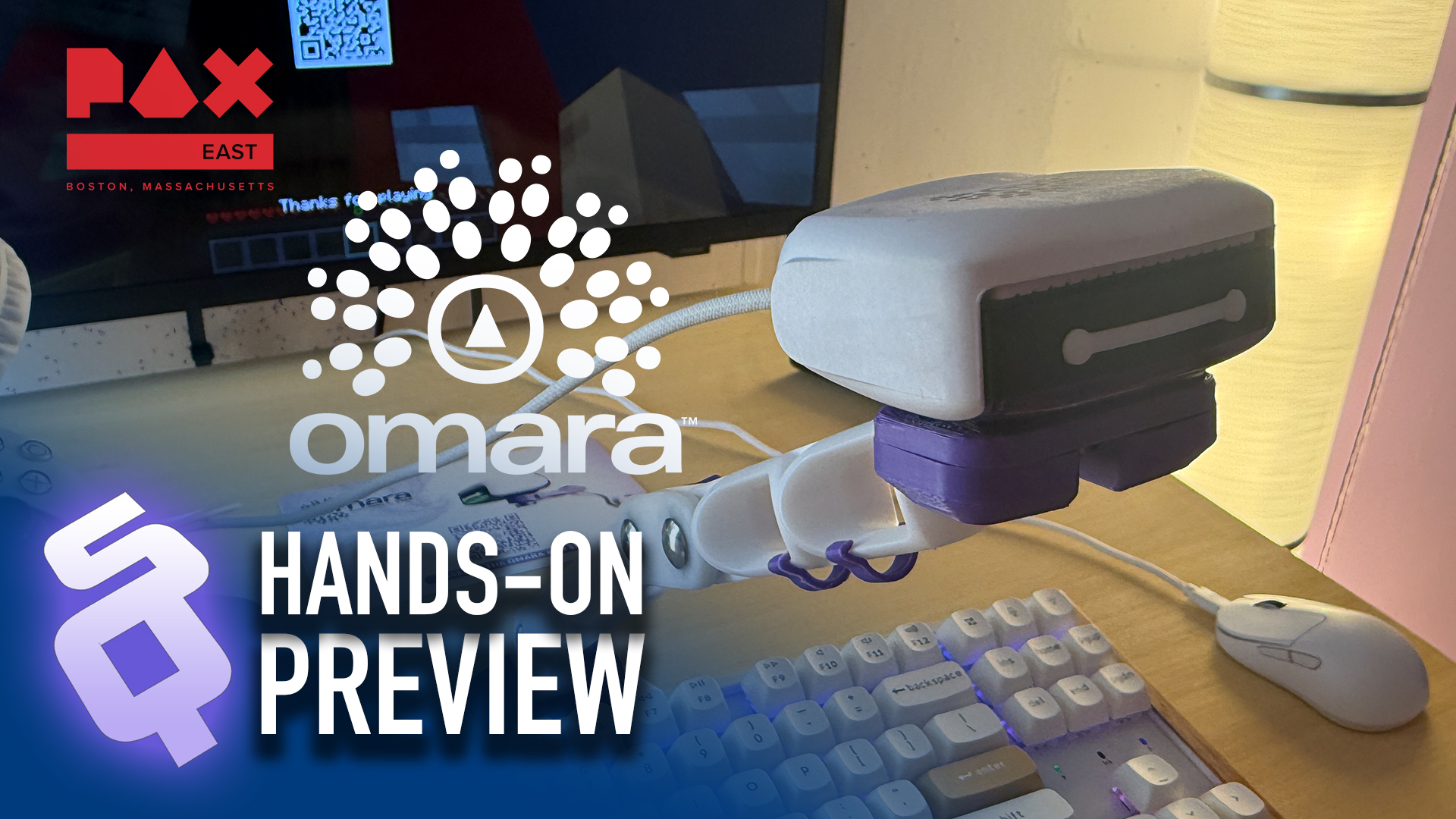
Immersion reaches a whole new level with the tiny device meant for gaming
I need to admit that I was a tad bit skeptical heading into my appointment with OVR Technology at PAX East. Creating scent isn’t anything groundbreakingly new when it comes to entertainment immersion, but it’s almost always been on the less serious side, so much so that it typically comes off as a gimmick. OVR’s Omara aims to change that mentality, and after the all-to-brief hands-on session I’m becoming convinced that they might just pull of a brand new level of immersion.
I sat with Erik Cooper (Design) and Sam Wisniewski (President) of the company to understand why they’d dive into this avenue.
Dali (SQ): What kicked off your desire to develop the OMARA?
Sam (OVR): Scent is vital to how we experience the world. It’s unique in how it connects memory with emotion, cognition, behavior — it’s lacking in the digital world, so we felt that it was something that belongs here.
SQ: Tell me about the device. Why is this so different to what we’ve seen in the past?
Sam: When we started the company we approached the idea of scent with the question of “how do we need to do it to do it correctly” so that people get value and are willing to use it. And that comes down to creating something that’s fun and easy to use but also has the level of control that (since it releases such small amounts of scent) the scents can be switched rapidly as needed.
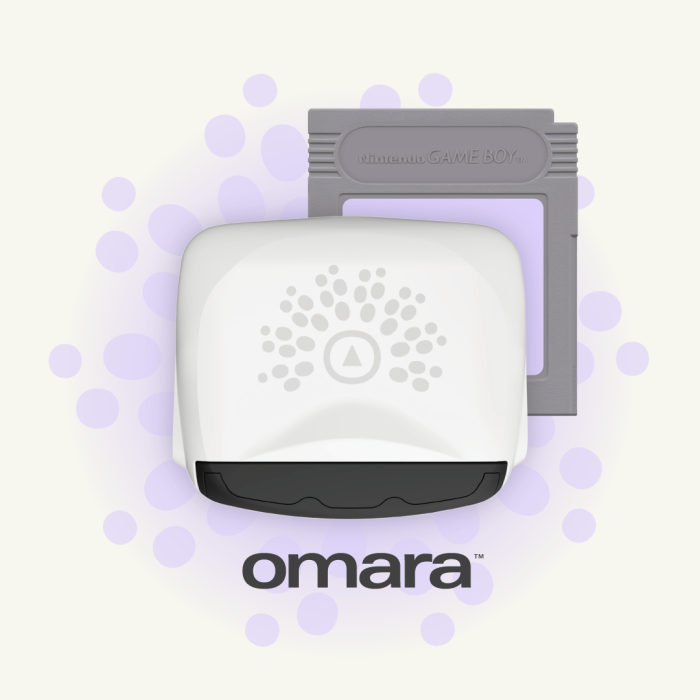
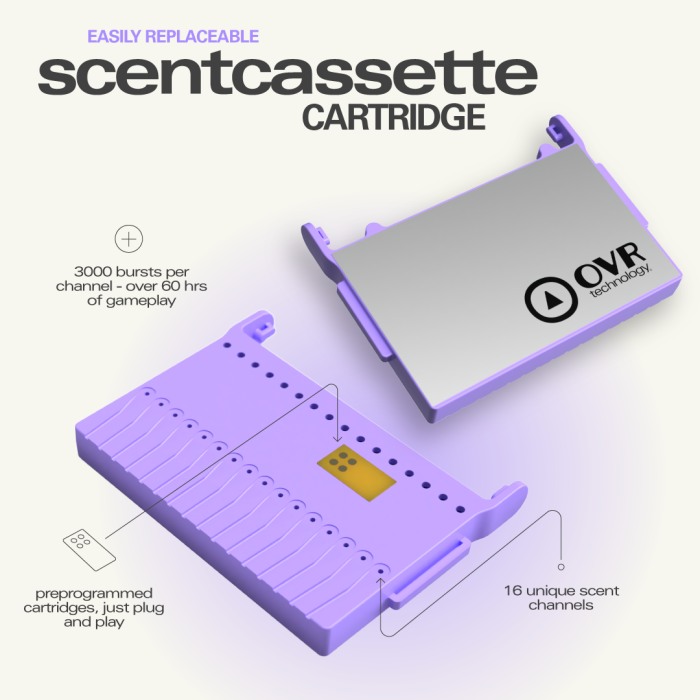
So this is what we’ve come up with. This hardware is small, it’s non-invasive, and uses scentware, a cartridge that has 16 different scents built in, and software that works with Unity and Unreal so that developers can create a wide range of interactions. This can be something like time-based indicators, or proximity, or biome or action changes. Really the core elements. We’ve built the plugins to function almost like spatial sound so that developers have an easier time implementing them.
SQ: So it’s not always on?
Sam: No, we’ve even built an algorithm and a system of cooldowns so that you’re not always inundated with the scent.
SQ: I can kind of see developers adding in a cooldown after a big bosst battle so that we’re getting our of a rage-inducing moment.
Sam: That’s very much in the developer’s tooblox now. Either after a battle or even using it as a build up to let you know something is coming. As the scent comes in it’s suddenly building tension, whereas in places like safe rooms there’s a much more calming scent. It’s a way to extend the experience outside of the game and into how we interact with it and how a game affects us.
SQ: So there’s a lot of possibility with the tech in a world, both active and emotionally.
Sam: Yeah, we’ve even developed something like a kindred scent that helps us connect with characters in games. Imagine remembering how a specific character or sibling smells and what that does to us whenever we see them on screen.
SQ: I like that it’s just a lite blast of scent, too.
Erik: That’s key too. Another thing that happens is habituation. Your nose can get used to a scent, so if you’re always smelling it then it either needs to get stronger or it needs to be turned off for a while and sort of reset.
SQ: How long does the cartridge typically last?
Sam: About 100 hours, up to three months, but it obviously depends on how much you use it.
SQ: Tell me about the scents. Are they standard?
Sam: We have 16 scents in each cartridge. We worked with olfactory neuroscientists and master perfumers to select and create the scents, and make sure they were in the range of neutral to pleasant. But every now and then there may be a scent that someone just doesn’t like, so they can easily turn that off in the game or app. We don’t want people to avoid the device just because of one scent.
Erik: Each of the scents are really well designed and forgivine. For instance, one of the really interesting aspects of the citrus scent is that there are notes of other fruits in there, so if you smell one thing then someone else might gravitate towards one of the notes that make it more like a wine. There’s a lot of psychology that goes into scent design.
SQ: What went into the size of the unit? Did you start off larger and then work your way down?
Erik: Well, we did a lot of research and understanding before we even put any pen to paper, and realized that one of the things that people don’t want is something too big or in the way. They don’t want a product to inhibit their daily use. They want it small enough and almost in the background. So, we started as small as feasibly possible. I remember taking a chunk of blue foam and sanded away at it until it felt comfortable to carry around, getting it down to almost invisible in my fist, and then worked to fit everything in. Styling-wise I wanted to make it look as friendly and accessible as possible, and even took some cues from vehicles like the Rivian’s front end, which gives it an almost happy robot face.
SQ: I can see myself walk around my office and hold onto this, almost like a fidget spinner, bringing it to another computer or keeping it with me if I need a quick pick me up. It’s small enough to chuck across a room.
Erik: Yeah, you could probably skip it across a pond. Haha!
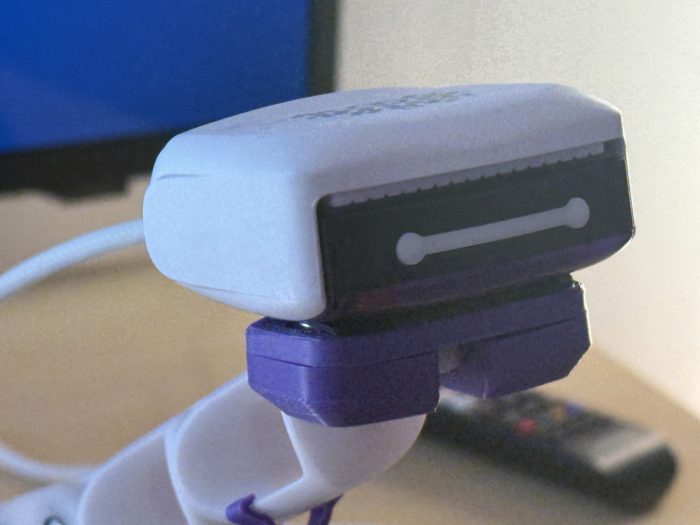
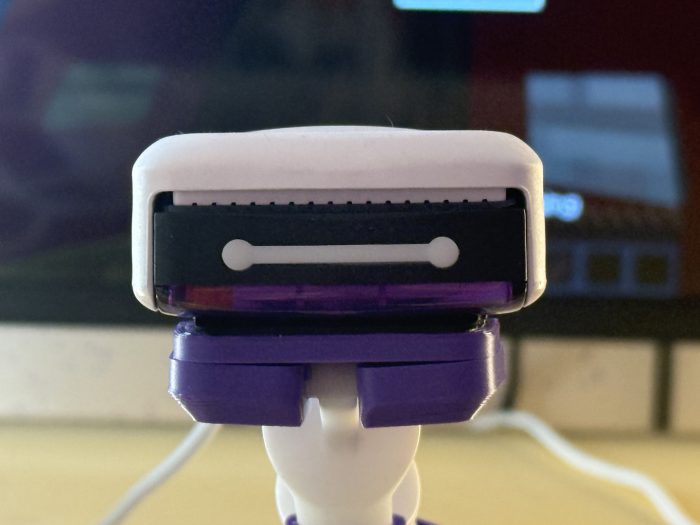
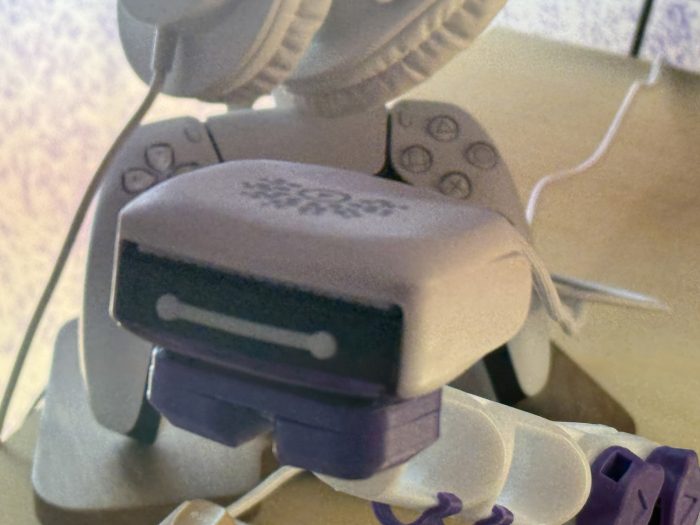
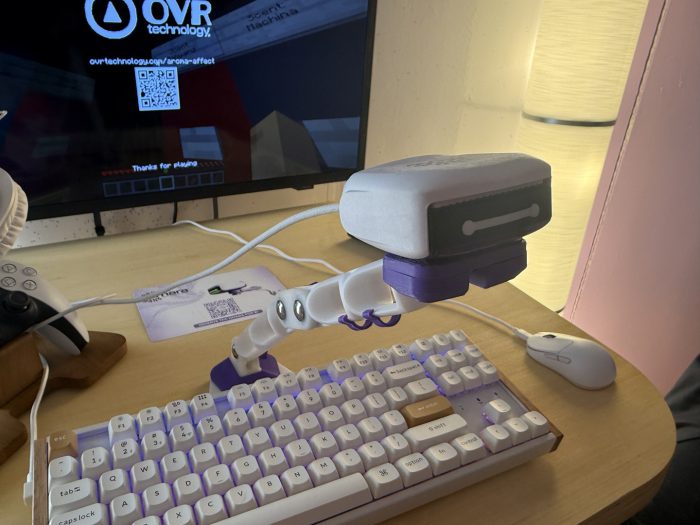
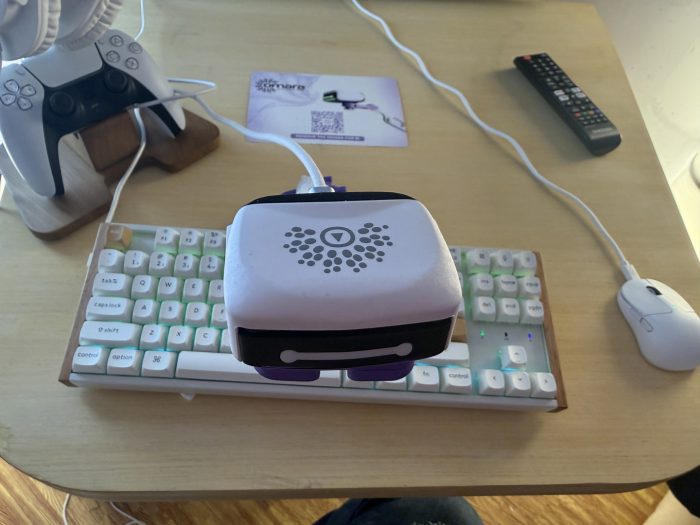
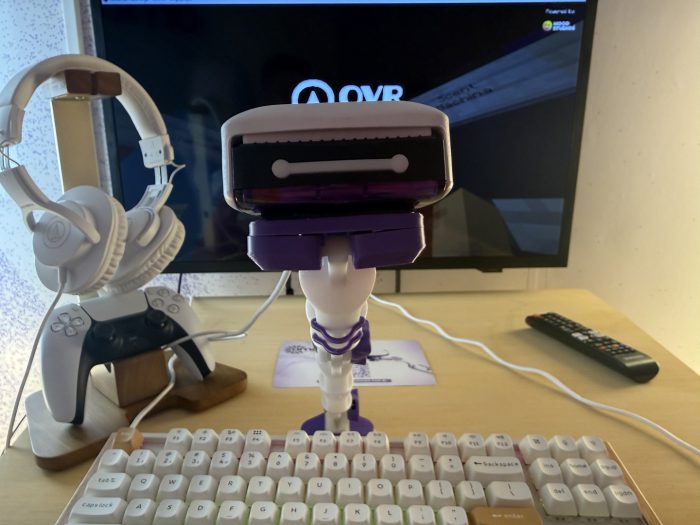
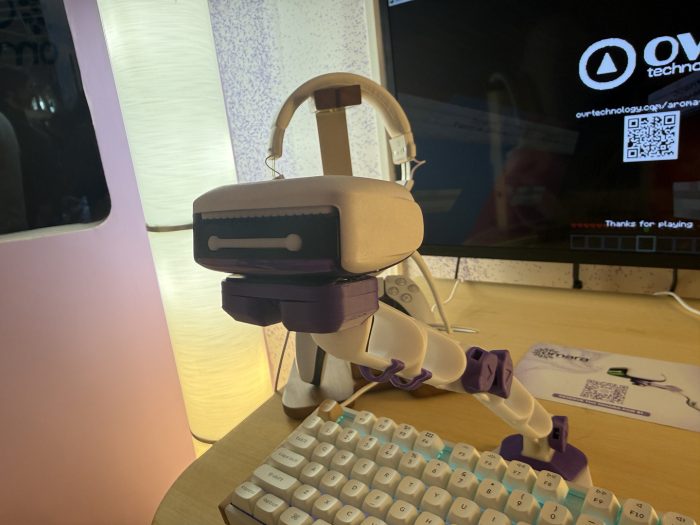
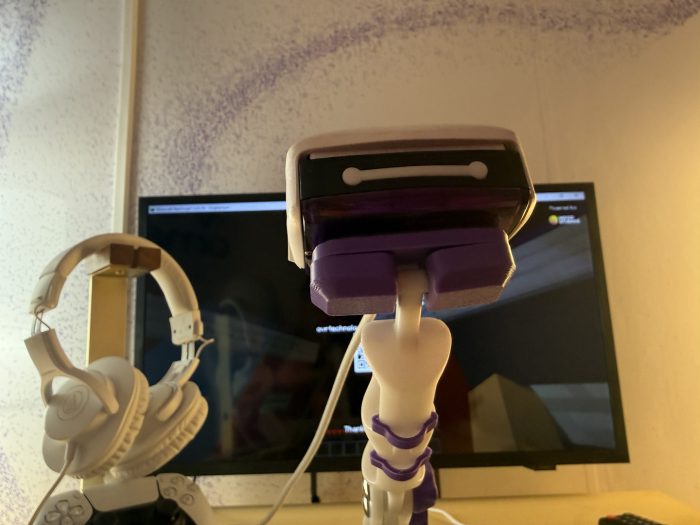
Hearing a pitch is one thing, but actually experiencing the device is what can really show its possibility, so I jumped into a special “aroma” mod of Minecraft that the team had prepared. Placed on an arm about 8-9 inches from my face, the device connects to the PC and kicks off with a tiny puff of air to let me know that it’s activated. As I scoot around the game’s environment I come up to points designed to show the different methods of applying scent. If I’m close to a patch of flowers I smell lavender in my proximity. If I hop into a pool of water I get a lite blast of oceanic scent, which is different enough from the icy room I walk into that gives an almost wintergeen flavor to the air. I feed a horse an apple and I smell that apple. I find and smell citrus, I cook a piece of meat and smell the details of it in the air.
Scent needs to be done artfully; it shouldn’t be on all the time. The OMARA focuses on the moment usage that can affect us, much like how rumble or haptics work in games. It’s not meant to overpower, just indicate. If I had unknowingly fallen into that pool of water in the past I’d only know by lfeeling a vibration (if rumble is on) or hearing a splash (if I have the audio turned up enough), but now that little waft of freshness is enough to give me yet another way to know what’s happening.
The demo is short and meant to show just a few ways of using the tehcnology, but it’s quite charming in execution. From the indicators to the ability to show transitions (like raw meat turning into cooked spiced meat) there’s plenty of opportunity for the smaller aspects of scent to shine. The demo essentially ends with a big button that lets me make it rain, and boy oh boy was that scent absolutely refreshing after a long day on the show floor.
The OVR Omara is an intriguing device. It’s not like covering our desk in incense burners, or plugging in a Glade. It feels like it’s meant to pull at the edges of an experience to enhance it, but by using that one sense that often goes overlooked. It’s getting into the hands of developers and influencers, with preorders now open for the rest of us.
This preview based on hands-on at PAX East 2026. Images and video courtesy publisher and SideQuesting.


No Comments