
![[Review] Blades of Fire](https://www.sidequesting.com/wp-content/uploads/blades-of-fire-review.jpg)
Blades of Fire is a disappointing action adventure from the team behind Metroid Dread
I was a big fan of MercurySteam’s Castlevania: Lords of Shadow trilogy. I even enjoyed the third one (LOS 2), which has been panned by most. In my mind the developer has always been a B-Tier studio that manages to put out interesting games with the resources they have. But that all changed with Blades of Fire.
An action-adventure game that draws as much from sword and sorcery fantasy films of the 80s as it does from Dark Souls and God of War, Blades of Fire ends up feeling like a pastiche of ideas that never ends up coming together into a cohesive whole with its own identity.
The story in Blades of Fire follows Aran, a warrior and Master Forger who along with his young sidekick Adso sets out to kill the evil queen of the land. On the way to her castle, we are constantly diverted by subplots that stretch out way too long in a story that’s already as generic as they come. It took me about twenty hours to get through the first act, and there was still much left to be discovered in the map. The more I played the more it dragged on and the more I hated the game, in spite of its interesting combat and crafting mechanics.
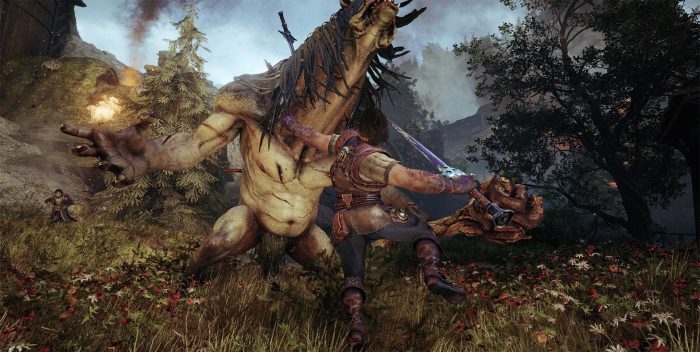
Combat is purely melee focused, being multidirectional based on the face-buttons we press. By pressing X and B on the Xbox controller we attack left and right, while the A and Y buttons attack low and high. While it has more layers, like charged attacks and switching between stances to better deal with certain enemies, it all becomes overly simple and dull rather quickly. And with a game that’s around 80 hours in length, it just becomes a chore. This was compounded by a severe lack of variety in enemies, many of which are basic human and undead fodder, the only changes usually being the weapons they carry.
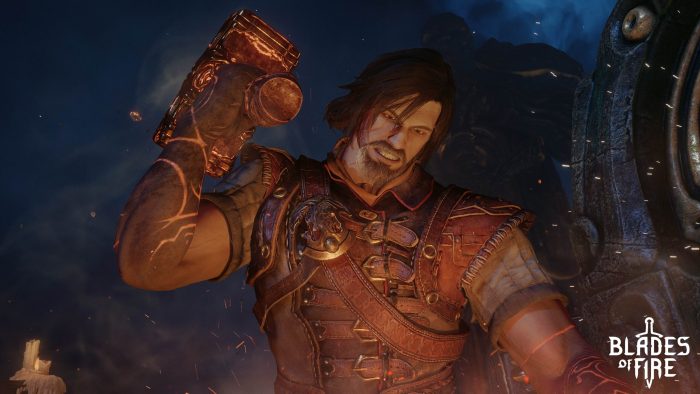
Forging weapons is probably the highlight of the game, giving us a lot to work with in terms of depth. But even this becomes a chore when you have to fast-travel every time to your forge to craft. Anvils, which we’d think were thematically tied to forging, are spread out across the world, acting like the Bonfires from the Dark Souls games, but they can’t be used to craft. If we want to, we always need to load into another area. Playing on the Xbox Series X, loading times in Blades of Fire were abysmal.
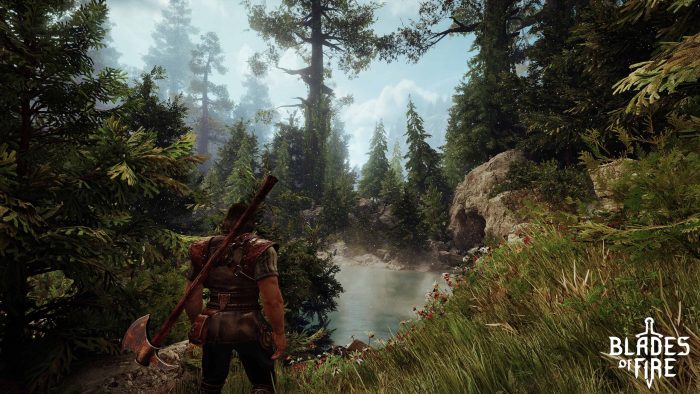
There’s a lot to discover in the world, but it’s a confusing mess. The chaotic map is full of branching and winding paths, with many leading to dead ends or circling back in on themselves for no reason. One large area in the earlier parts of the game was a labyrinthine fort that had us escorting an undead child, requiring us to dodge kidnapping witches and a boss that returns from the grave every 30-60 seconds to hunt us down. Such annoying level design continues throughout the game in a way that feels like it’s simply doing it to frustrate.
I initially liked the music in the game, but it quickly became apparent that it was a soundtrack on loop. Songs weren’t regulated to the area I was in, so there were many clashes of environmental aesthetics with the audio ambiance. It just didn’t fit.
On paper, Blades of Fire sounds like a great game. But with terrible level design, lack of enemy variety, and dull combat, it ends up becoming a game that could easily have been a lost Xbox 360 era game only now discovered, but maybe it shouldn’t have been found.
This review is based on an Xbox code sent to SideQuesting by the publisher.


No Comments