
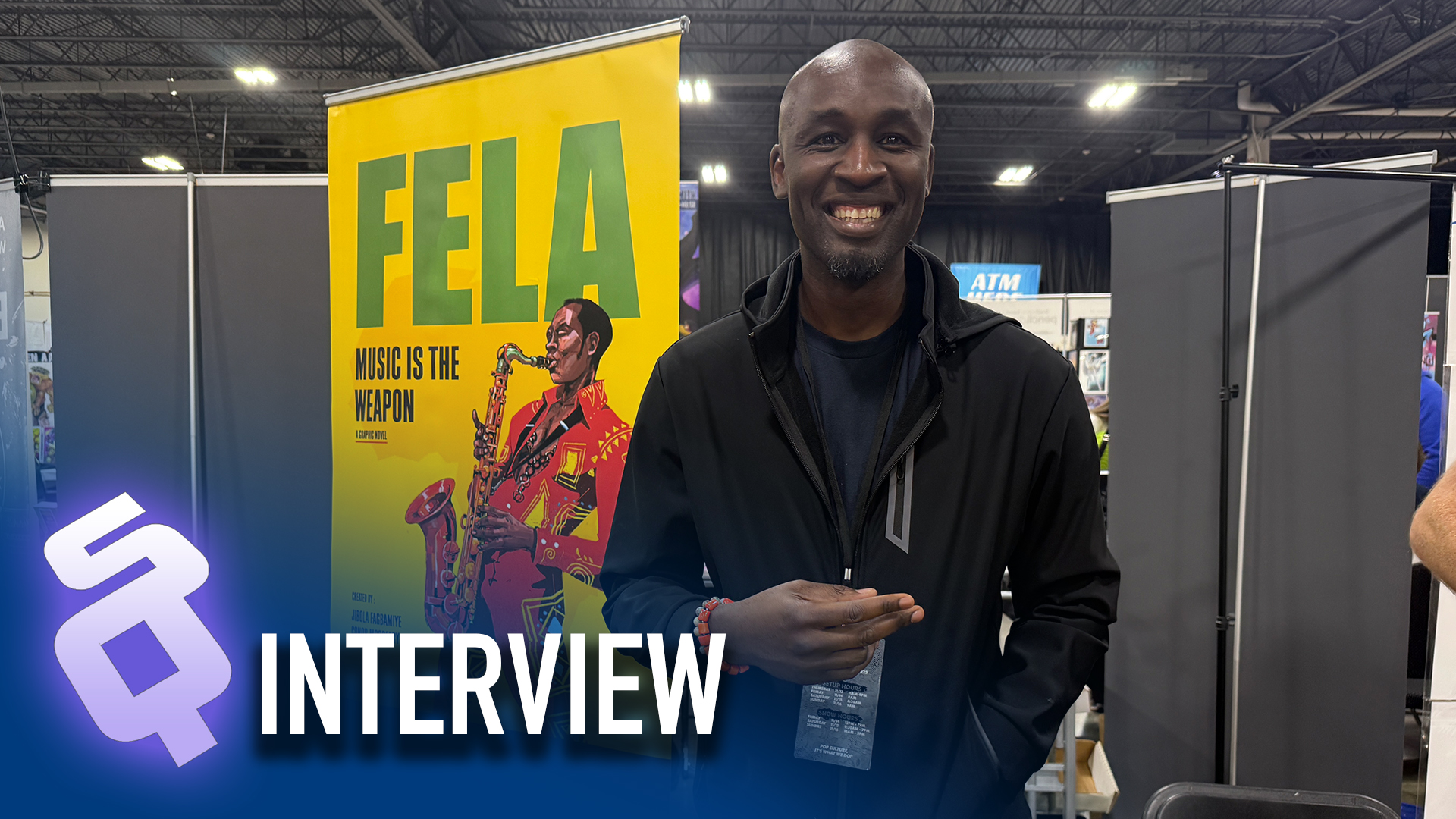
The biography follows Nigerian musician Fela and his incredible story
Music is a weapon. Or, rather, it can be, both literally and culturally. That’s the premise behind Jibola Fagbamiye’s FELA, the biographical graphic novel about the famed Nigerian musician Fela Kuti. The book follows the life of a person who changed so much of the Nigerian music scene, ultimately leading to political and cultural shockwaves.
I had the chance to chat with Fagbamiye at MC3 (Motor City Comic Con) and by the time I was done reading the book I had a new appreciation for the musician — and a huge playlist that has been in heavy rotation.
SQ: How long have you been working on the project?
Jibola Fagbamiye: I’ve been working on it for over 10 years.
SQ: Tell me a little bit of the story of FELA.
JF: So, Fela’s a Nigerian musician that created a genre of music called Afrobeat, which is a fusion of jazz, punk, high life. What makes him interesting is that he ran for president of Nigeria at one point, married 27 women in one day (making total wife count 28), was arrested over 200 times and also created his own country.

SQ: Wow, that’s quite a resume there!
JF: Yeah, pretty much! He released over almost 80 albums in his lifetime. He released a song called “Zombie” which mocked the totalitarian Nigerian government at the time. It basically called them mindless… zombies, right? So they sent a 1000 soldiers to his house, burnt it down, and threw his mother out the 2nd floor window. His mom negotiated the independence of Nigeria, so it’s not just any mom. They beat him to a pulp and arrested him for 27 days. And when he came back on stage after 27 days guess what song he sang? “Zombie.”
SQ: Wow, that’s an incredible response by him! Did that affect your creation of the book?
JF: Yes! Definitely! So I had this idea. I was like, “Oh man, wouldn’t it be so cool that when that attack happens, it’s actually zombies that came to attack him?” So, stretching that idea, in Fela’s biography, when I read it and what gave me the bug, it actually starts off with “The first time I was born.” And I thought, “the first time I was born?” I thought it was really interesting, and that there’s something powerful there.
We (alongside Writer Conor McCreery) start the story in this dream world before he was born, and the story sort of evolves from there. Besides the dream sequence, we go all the way to when he becomes this huge superstar and beyond. And as his life becomes more complicated, the art becomes darker and heavier. So the art actually changes throughout the book, and we see how music affects his journey and how that ultimately tells his story. We may embellish a little for the sake of the storytelling, but it’s all told through that lens of music and how to use for change.
FELA: Music is the Weapon is available at many major and independent book stores now. Find out more at its website.
Photos by Dali Dimovski (SideQuesting)


No Comments