
For a game that has poppy visuals and a lot of layers to its character system, Vivid World is perhaps most striking in its plot
Prior to a cold email, I had never heard of let alone knew anything about Asobsim’s Vivid World. The autobattler/roguelike hybrid is actually a sequel to a game called Vivid Knight, which is a popular entry in the genre that has a surprisingly considerable fanbase. I’ve played autobattlers, but they never hook me for long enough to get in too deep, mostly because the plots are paper thin and the gameplay loops are extremely repetitive, which is THE POINT.
So, presented with Vivid World, and in between some other reviews on the calendar, I opted to give it a whirl. And while I’m not going to come out of this reformed, I can at least understand why these games are popular, and why this specific one can be a bit of unique enough take that it’s worth a second or third look.
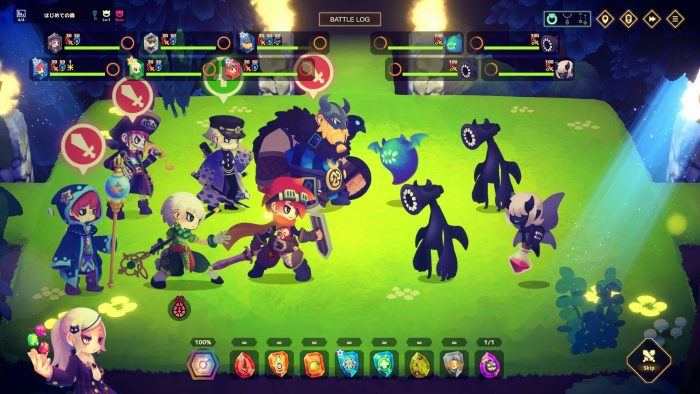
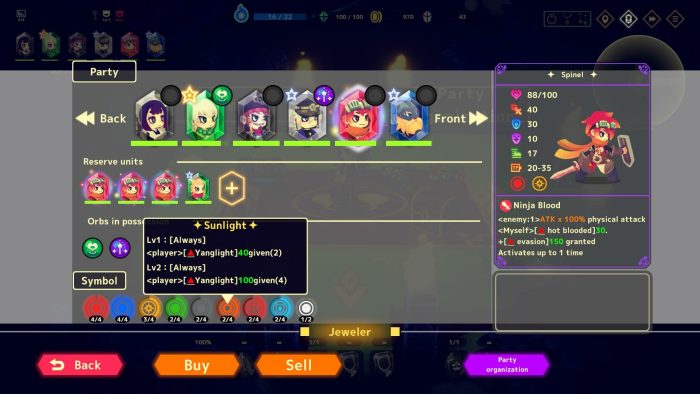
The game has us controlling a team of gem-based characters that grow and enhance with each run essentially by collecting and merging. It has a randomized, gacha-like loop, from the procedurally generated world to the characters that that we actually get in our party. Party members have unique classes that can work well in combos called Unions, and are aimed at having us build into them. However, that randomizing mean thar the game doesn’t always let us get to where we want. Do I want to set up a team of Pirates? Yes, I do, but then the game may only ever give me Vikings for the first few picks, making my priorities change.
The battles, relying on our team builds, can therefore be a little all over the place if we’re not prepared. It’s an autobattler, where we use combat gems, tools and abilities to set up what our team will do in specific situations. It’s sometimes rock-paper-scissors in that specfic abilities and team members work better in specific situations than others do, or are hindrance if they’re mismatched. The Unions themselves are cool and powerful, so when we finally do get a team prepper how we want it then it’s fun to watch them unleash their wrath over and over in a run.
And boy is it run-based. Like any roguelike Vivid World lets us choose our paths on a map. We can move from a fight to a shop to a character pick to something else, and it’s especially important in this game to balance what we do because running headlong doesn’t work well. The game is not super balanced at the moment, and it’s common to crash out fairly early in a run if the path we’re taking is overpowering our current team with battle after battle. There are a lot of floors to traverse through in each run, and bosses on a lot of them, so planning and surviving is often more important than advancing.
What throws me for a loop is the other half of the experience, the story. It tells the tale of a girl whose closest friends have been turned into gems, and her world has essentially been shattered. Lonely, it’s up to her to get them back by collecting fragments of their souls. Yes, it’s built around that autobattling gacha loop, and it’s extremely pop-friendly and chibi in its aesthetic, but it has an undertone of melancholy and sometimes even dives into sadness to push our character along.
Balancing the personal story with the gameplay loop feels coherent and purposeful.
Vivid World is as genre as the autobattler gets, and fans of it will likely enjoy this too, but it’s not necessarily trying anything new. It’s a refinement of a refinement, and it nails what it’s trying to do. It’s a little deep initially, because it tries to throw everything mechanically at us at once, but that really is my only turn-off. Once I learned the loop and the character building aspect, I was able to get going appreciate what the developers are trying to achieve.
This review is based on a Steam code sent to SideQuesting by the publisher. The video originally appeared on The SideQuest LIVE on November 13th, 2025.


No Comments