
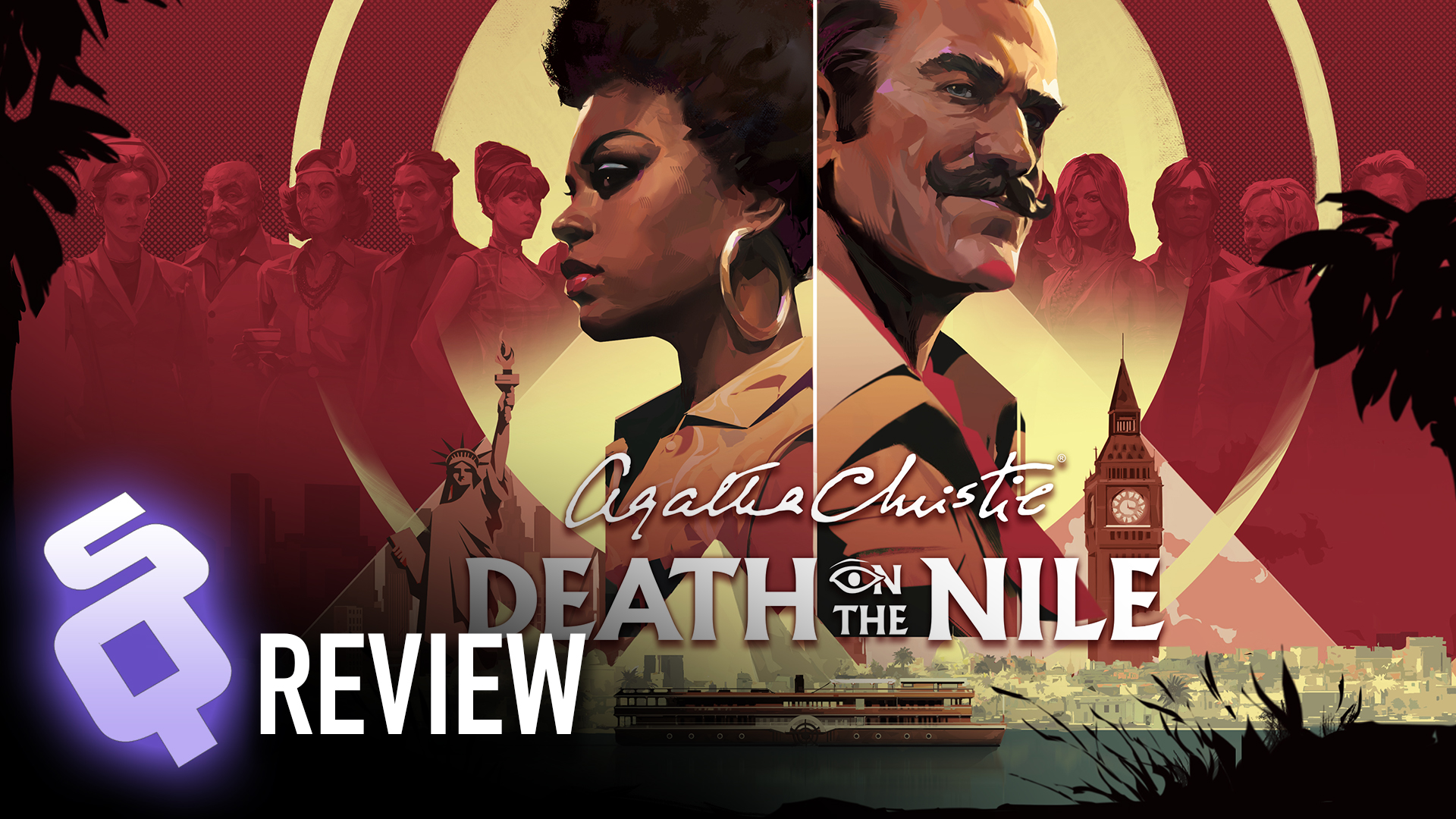
I never thought of myself as an Agatha Christie fan, but now I may be all in for the magic mysteries
I have long commutes to work, sometimes hitting 2 hours each way. I need to listen to things to keep me from falling asleep (old age and a lot of sedintary activity during those drives), and having blasted through my podcast list I’ve rolled back into audio books. I’ve recently gotten into the Agatha Christie collection, because the Hercule Poirot character is classically terrific and I’m a huge fan of the Knives Out and CLUE films, which are an homage to her “whodunnit” style. Christie was a master at weaving little mysteries that eventually tie together into a big revelation, and the reason why I love her work is because the books are interactive, in a way. They leave us as the readers to try and put pieces together as the stories unfold, where every new little revelation has us guessing and planning and thinking. When I’m driving and listening I’m also thinking, I’m mentally taking notes, I’m judging and deciphering, in hopes that I can keep up with Poirot and his problem-solving process.
Her work is almost the prototype for the fast adventure genre, so adapting it into video games may seem like a slam dunk — but it’s actually more difficult. You can’t make them action games, you can’t make them too straightforward or too open. Christie guided readers, she didn’t leave them in an open world. She wanted us to become a sort of assistant, marvelling at what Poirot could accomplish and picking up his scraps.
What developers Microids have done with Agatha Christie’s Death on the Nile is to lean into the guiding side. They don’t let us be completely open, because that wouldn’t go well for people jumping into a master detective’s shoes for the first time. We wouldn’t know what to look for or where to look for it. Instead, they want us to see and do specifically what Poirot would see and do. We have a set number of people we can talk to, because these are the people he would talk to, and things we can do and interact with because these are things that he would do and interact with. The semblance of “free will” here is false. And that, actually, makes the experience a whole lot better.
The game is loaded with puzzles, with detective tropes, but the longer we play the better we become at understanding what’s important and what isn’t, what Poirot would find useful and how he would look at a specific circumstance.
It’s heavily guided but with an invisible hand, and I’m completely happy that’s the route.
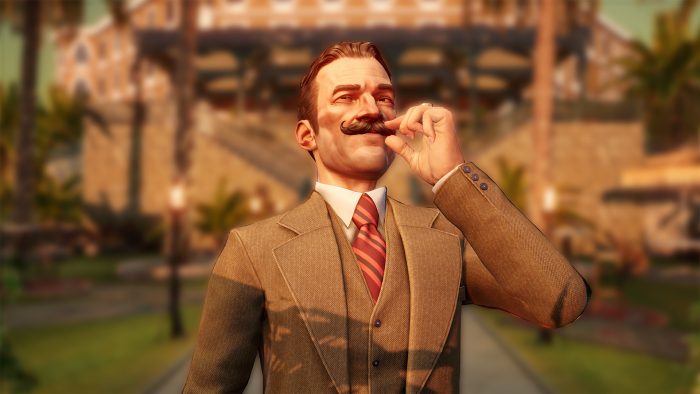
Death on the Nile is really faithful to the book. This is a classic piece of Christie literature, and so you don’t want to actually stray too far away from the source material. By staying pretty close, the experience does feel like the book’s interactivity is still there but now in a more visual way. There are some liberties taken, as it’s now set in the Seventies, but they’re for the better. The soundtrack is great, from the opening Disco to the hectic sequences on the boat itself. The character design and vocal performances create terrific portraits of the cast. Now, there’s magic in just the text of the book itself, because our imagination is forced to work to see and hear these people, and the game’s interpretation doesn’t always line up with what was in my head when reading the novel, but it’s still a great way to be in the game’s world.
It’s an adventure game, and asks us to walk around, explore and interact. We keep a sort of ledger on all of the people we meet, taking notes on who they are, their motives, and their possible next steps. I’m a huge fan of mind maps, and the game employs them to allow us to link the clues and characters and notes together to start finding direction before we hopefully come to a conclusion. And that’s an interesting facet, too, because we can solve a crime and find the right culprit but we can also be wrong, although it never feels like we’re too WAY off. That’s because the developers have limited the choices to those that Poirot would angle towards. For example in conversations (or interrogations) there aren’t long tracks of selections that players have to go through. Instead, we’ll have one or two options, one or two or maybe three ways to evaluate a clue, and that’s enough. We don’t want to get lost or off track. Sometimes it’s does feel just a slightly bit confined, but then at the same time I don’t want to keep a notebook of my own handwritten clues and drawings and interpretations; that’s not how to approach an adaptation like this. Just keep us in the general vicinity of the investigation is a good design focus.

The game has 10-12 hours of a story, and almost serves as a great accompanying piece to the original literature or the various film adaptations that have been made. Outside of the book itself, this almost feels like the best way to approach the source material, allowing us to be interactive with the plot while secretly being led down a path towards an outcome. Death on the Nile is a game that a specific group, literature lovers and perhaps our parents or people that don’t necessarily play games often, can possibly appreciate and enjoy. It’s a satisfying experience that made me appreciate the way Christie approaches all of her detective novels, and even had me interested in grabbing the next few books for the road.
If anything it’s worth playing just for the supremely stylish Hercule Poirot, who should unabashedly become a gaming heart throb with that mustache he’s sporting.
This review is based on a Steam code sent to SideQuesting by the publisher. Images and video courtesy the Publisher. This video originally aired on The SideQuest for September 23, 2025.


No Comments