
![Super Yooka-Laylee Kart [Preview]: Mode 7 for life, baby](https://www.sidequesting.com/wp-content/uploads/super-yooka-kart-preview.jpg)
Hands-on with pixel perfect pedal punching
When Super Mario Kart first landed on the scene it blew away minds, utilizing Mode 7 effects to create a truly iconic racing experience. It’s gotten better over the years, with every sequel basically dethroning the previous one, to land with Mario Kart 8 and Mario Kart World as two of the best racing games ever, period. And while visuals have advance for the decades since, there’s been a new nostalgic push to the original 16-bit era with HD-2D becoming a beautiful way to represent pixels in new ways.
Playtonic, made up of some of the developers behind arguably the BETTER immediate Mario Kart sequel, Diddy Kong Racing, have taken their knowledge of the genre and merged it with that HD-2D Mode 7 magic and their own Yooka-Laylee IP to create a kart experience that is, frankly, pretty fantastic.
Just don’t drive as a vending machine.
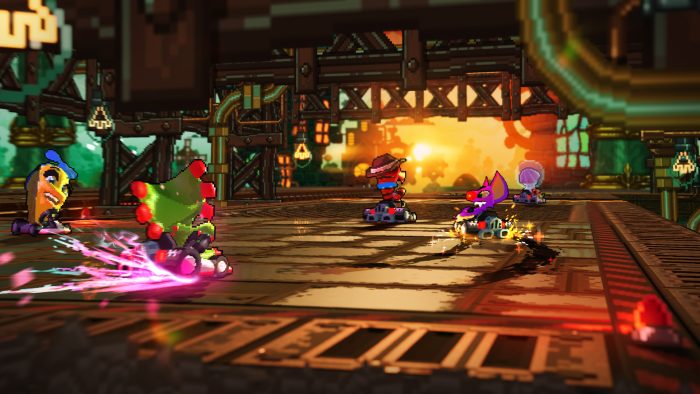
I learned that the hard way during our hands-on session at Summer Game Fest last week, when I thought using the heavy, Vendi, on the tracks would be akin to how I drive with Bowser in modern Mario Kart. It’s most certainly not! Playtonic have really aimed to make their races, of which the opening selection is just a few for now, to be as unique and different from each other as possible. Vendi is slow to start and hard to turn quickly, but when they pick up speed they’re the fastest on the track, easily bowling over everyone in their path. In our races I always end up last, struggling to grasp that hey, Dali, you need to learn to drift around corners. Drifting is key, especially with a racer like Vendi, because losing momentum can be critical after a crash into a wall, of which I did A LOT. In the forest course I especially find myself having issues, speeding towards what I think is a beautiful grove of blossoms that ends up hiding a wall that I crash into every time.
Woof.
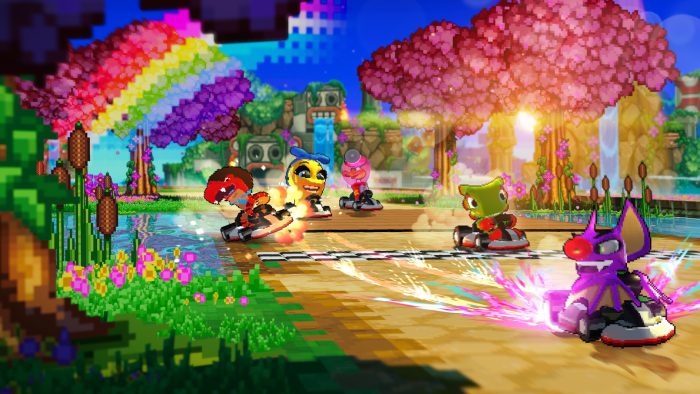
But that’s the core of kart racers; we need to learn how to control each character we play, moving up or down depending on how comfortable we are with the controls and weight and speed.
And that’s why YooKart opted to go to this 16-bit route. The game is mostly flat, with a few things like 2D trees and bushes and rocks standing out in our way like cardboard obstacles. That’s because the developers want players to see their opponents ahead of them on the track; if there’s a lot of verticality or shifting terrain then we don’t really know where we are in relation to our opponents, so seeing them is a nice little indicator that keeps us mentally in the race even though they may be farther ahead. In this build there was no minimal, either, but the developers are looking into adding one of it benefits the players.
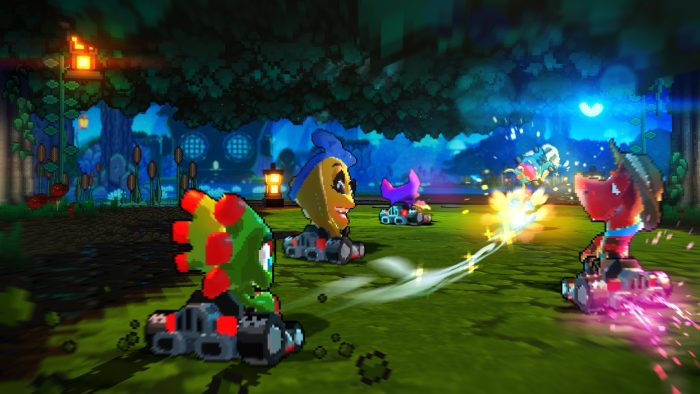
We played a couple regular races, with myself usually ending in last and SideQuesting’s Sam playing as Laylee and finishing races towards the front. The bat is a little smaller of a racer, and much more agile and responsive, even if they’re not as quick, but on a windy course that may be enough to keep a player in the mix.
The game also includes modes that let us really customize the experience. We try one race in which we’re all Vendi, another where we bounce around like bumper cars, and a third where we’re all invisible and our only way to gauge where we are is to watch dirty kicking up from the ground.
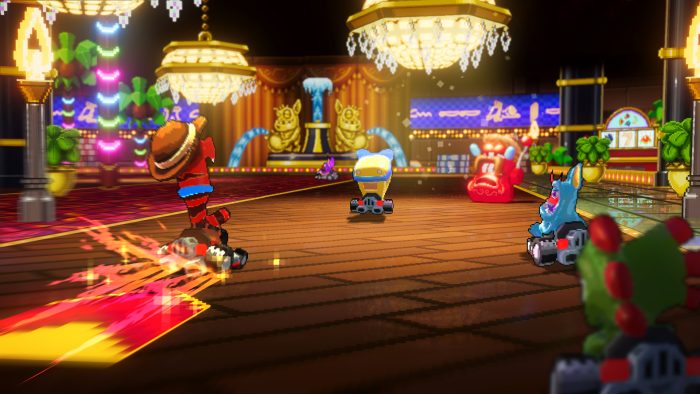
Super Yooka-Laylee Kart seems primed for lengthy game nights with friends, with plenty of ways to race either traditionally or in a sort of party fighting experience, throwing both our karts and items around in hopes we pull off a win. The game doesn’t have a release date announced yet.



No Comments